
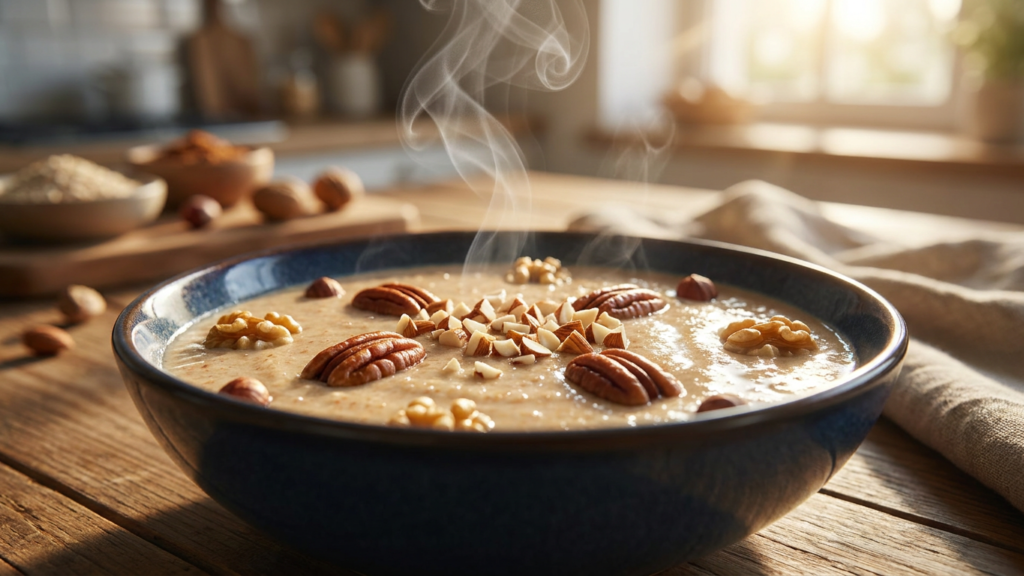
Talbina is a traditional barley-based dish that many Muslim and Middle Eastern communities have enjoyed for generations. Its name comes from the Arabic word “laban,” which refers to milk. The name relates to the dish’s soft, pale appearance and smooth consistency.
What Is Talbina?
Traditionally, cooks make talbina with barley flour or ground barley. They simmer the barley with milk or water until it develops a gentle and creamy texture.
Different regions have developed their own variations over time. Some versions include dates, honey, cinnamon, or nuts. These additions add flavor while preserving the simple nature of the dish.
Talbina in Prophetic Tradition
Talbina also holds an important place in Prophetic tradition. Many Muslim homes continue to value it as part of their food culture.
People have long associated talbina with comfort and nourishment. Its warm and soothing nature makes it suitable when people prefer simple and wholesome foods.
The Traditional Value of Barley
Barley has held an important place in many food cultures throughout history. Its versatility allows cooks to use it in many different types of dishes.
Barley-based recipes often reflect a simple and balanced approach to eating. They focus on moderation, nourishment, and wholesome ingredients.
Talbina in Modern Kitchens
Talbina continues to appeal to modern cooks. Its creamy texture and mild flavor work well with mindful and comforting eating habits.
The dish also offers plenty of flexibility. You can adjust the sweetness and toppings while keeping its traditional character. Traditional foods can also reflect cultural influences and changing cooking styles, as seen in the tradition and cultural influence behind stuffed beef rolls.
Simple Ways to Enjoy Talbina
You can serve talbina plain for a simple and mild dish. Dates or honey can add natural sweetness without overwhelming its gentle flavor.
Nuts and warming spices also make excellent toppings. Cinnamon, for example, can add warmth, while chopped nuts provide a pleasant contrast in texture.
Whether you enjoy it plain, sweetened with dates, or topped with nuts and spices, talbina remains a timeless dish. It connects tradition, comfort, and nourishment across generations.
You Might Also Like
Beyond the comforting tradition of Talbina, explore more time-honored remedies, refreshing homemade beverages, and hearty weeknight dishes to complement your healthy lifestyle: