
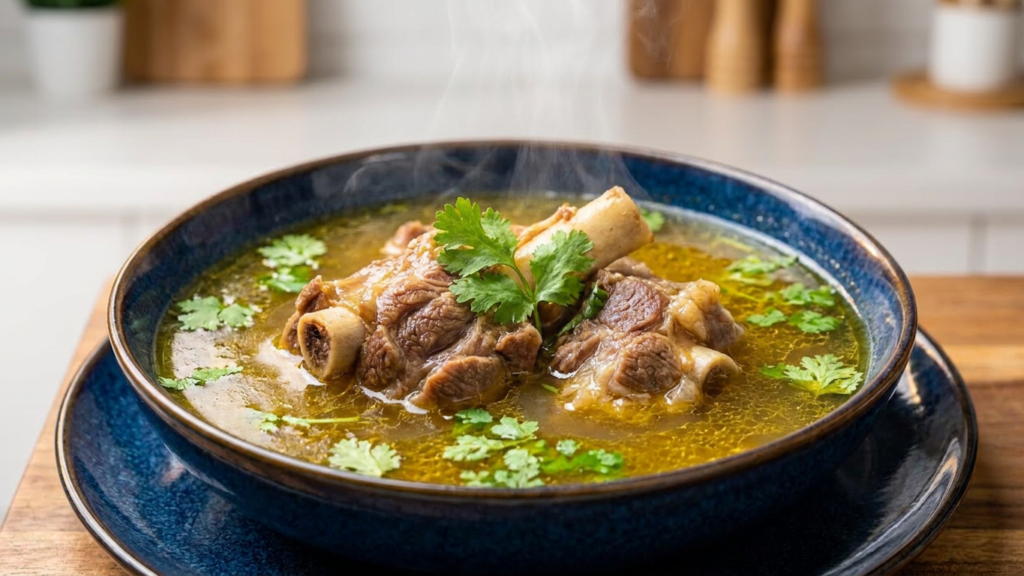
Bone broth has been appreciated across many cultures for generations. Bones, aromatics, and spices create deeply flavorful and comforting broths.
People prepare these broths through slow simmering or modern pressure cooking. Yakhni remains closely connected with nourishing home-style cooking.
Why Bone Broth Remains Popular
One reason bone broth remains widely valued is its rich texture. Cooking bones and connective tissues releases gelatin and collagen-related compounds into the broth.
These compounds contribute to the satisfying mouthfeel often associated with homemade yakhni and traditional stocks.
The Role of Collagen
Collagen naturally occurs in connective tissues, joints, skin, and bones. Bone-based broths contain gelatin and other nutrients that contribute to their rich and comforting quality.
The slow cooking process helps extract these components from the bones and connective tissues. This process also creates the characteristic body and texture of the broth.
Pressure Cooking Saves Time
Pressure cooking allows bones, marrow, and aromatics to release flavor efficiently. It also reduces cooking time compared with traditional simmering.
This method makes homemade broth more practical for modern kitchens. At the same time, it preserves the warmth and depth associated with traditional recipes.
Aromatics Add Depth and Warmth
Cooks often add ginger, garlic, black pepper, cinnamon, cloves, and whole spices to yakhni-style broths. These ingredients create layers of warmth and complexity.
The spices complement the natural richness of the stock without overpowering its flavor. They also give the broth a distinctive aroma.
A Traditional Comfort Food
Many traditional kitchens value yakhni as a comforting meal. People often enjoy it during colder seasons or when they prefer lighter and soothing foods.
Its warmth, simplicity, and deep savory flavor make it both comforting and satisfying. These qualities help explain its lasting place in traditional cooking.
Bringing Tradition Into Modern Cooking
Today, bone broth remains popular among people who appreciate wholesome homemade food and convenient pressure cooking. Its rich flavor also makes it useful in many everyday dishes.
You can enjoy yakhni on its own or use it as a base for soups, rice dishes, and stews. Much like how hummus has remained a staple across Middle Eastern tables, this versatility connects traditional nourishment with modern home cooking.