
Disclaimer: We are spice enthusiasts, not doctors or registered dietitians. The health benefits discussed in this article are for educational and informational purposes only and should not replace professional medical advice, diagnosis, or treatment. Always consult with a healthcare professional before making significant changes to your diet, especially if you have underlying health conditions.
Turmeric is one of the world’s most popular spices, valued for its warm flavor, vibrant golden color, and potential health benefits. Used for centuries in cooking and traditional practices, turmeric is now widely studied for its active compound, curcumin.
Research suggests that curcumin has antioxidant and anti-inflammatory properties, When used as part of a balanced diet it can be a flavorful and nutritious addition to balanced diet and healthy lifestyle.
In this guide, we will explore the science-backed health benefits of turmeric, why it works best with black pepper, how to use it in everyday cooking, how to make golden milk, and simple DIY skincare recipes.
What Is Turmeric?
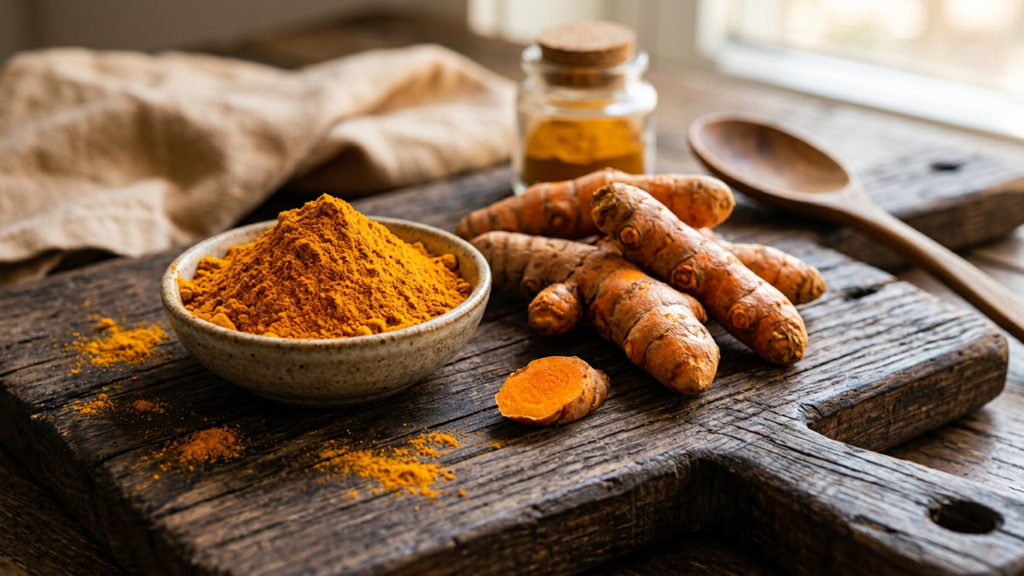
Turmeric comes from the root of the Curcuma longa plant, a member of the ginger family. Native to South Asia, it has been used for centuries as both a culinary spice and a traditional herbal ingredient. After harvesting, the root is boiled, dried, and ground into the bright yellow spice commonly used in curries, soups, rice dishes, and stews.
Turmeric naturally contains several beneficial plant compounds called curcuminoids. The most abundant and extensively studied of these is curcumin, which is responsible for many of turmeric’s antioxidant and anti-inflammatory properties. Turmeric contains only a small amount of curcumin, using it regularly in cooking is an easy way to include it in your diet.
Turmeric Nutrition Facts
Although turmeric is typically used in small amounts, it provides a variety of beneficial plant compounds and nutrients. A small serving contributes valuable antioxidants that help protect the body’s cells from oxidative stress caused by free radicals . In addition to curcumin and other curcuminoids, turmeric contains small amounts of:
- Curcumin (and other curcuminoids)
- Dietary fiber
- Manganese
- Iron
- Potassium
- Vitamin B6
5 Science-Backed Health Benefits of Turmeric
1. Rich in Antioxidants
Curcumin is a powerful natural antioxidant that helps neutralize free radicals—unstable molecules that can damage cells through oxidative stress. By helping protect cells from this damage, turmeric may contribute to maintaining overall health and healthy aging.
Research also suggests that curcumin may support the body’s own antioxidant defenses, making it one of the most extensively studied natural compounds in this area.
2. Supports a Healthy Inflammatory Response
Long-term, low-grade inflammation has been linked to many chronic health conditions. Curcumin has been widely studied for its anti-inflammatory properties. Research suggests it may help support the body’s normal inflammatory response by influencing several biological pathways involved in inflammation, researchers continue to investigate curcumin’s potential role in supporting overall health.
3. May Support Joint Health
Healthy joints are important for maintaining mobility and an active lifestyle. Because inflammation and oxidative stress can affect joint tissues over time, researchers have investigated curcumin for its potential role in supporting joint comfort and mobility.
Several clinical studies have reported encouraging results, therefore adding turmeric to everyday meals is a practical and flavorful way to include this well-researched spice in your diet.
4. Supports Brain Health
The brain is especially vulnerable to oxidative stress, which can affect healthy brain cells over time. Because curcumin has antioxidant and anti-inflammatory properties, researchers are studying whether it may help support normal brain function and protect brain cells from oxidative damage. Adding turmeric to a balanced diet is a simple way to enjoy its potential benefits.
5. May Support Heart Health
Researchers are also investigating whether curcumin’s antioxidant and anti-inflammatory properties may help support cardiovascular health. While turmeric is not a substitute for medical care or heart medications, but using turmeric to season home-cooked meals supports overall cardiovascular health by adding robust flavor without relying on excessive, heart-damaging salt.
Why Turmeric Works Better with Black Pepper
One of the most important things to know about turmeric is that curcumin is naturally difficult for the body to absorb on its own. To unlock its full potential, you need two simple kitchen allies:
- Black Pepper: Black pepper contains piperine, a natural compound that has been shown to increase curcumin absorption by up to 2,000% (20-fold) in humans when consumed together. This finding comes from a widely cited clinical study and explains why turmeric and black pepper are often paired in traditional recipes.
- Healthy Fats: Curcumin is fat-soluble. Consuming turmeric alongside healthy fats—such as milk, yogurt, olive oil, coconut oil, or nuts—helps the body absorb it much more effectively.
This is why traditional dishes like curries always combine turmeric with black pepper and cooking oils. You can enjoy this powerful combination in our Chicken Karahi, Mutton Yakhni, and Instant Pot Beef Stew, where turmeric, black pepper, and healthy fats come together to create rich flavor while helping maximize curcumin absorption. It’s a time-tested culinary habit that helps you get the absolute most out of this remarkable spice.
Is Drinking Turmeric in Water the Best Option?
A common recommendation is to drink turmeric mixed with plain water, especially first thing in the morning. While this is generally safe for most healthy adults, it may not be the most effective way to enjoy turmeric.
Because curcumin is poorly absorbed on its own, the body misses out on a lot of its benefits without the right pairings. Instead of drinking plain turmeric water, you can get much better results by:
- Adding a pinch: Toss turmeric and black pepper into everyday meals like our Chicken Karahi, Mutton Yakhni, or Instant Pot Beef Stew for a delicious way to enjoy turmeric as part of a balanced diet.
- Stirring it in: Whisking turmeric into lentils, dals, or rice right while they simmer.
- Whipping up a latte: Preparing a comforting, warm cup of traditional golden milk.
- Marinating: Mixing turmeric into yogurt-based sauces, dips, or meat marinades.
Our goal isn’t simply to consume turmeric—it’s to prepare it in a way that helps the body truly absorb its beneficial compounds.
How to Make Golden Milk (Turmeric Tea)
Golden milk is a delicious, practical, and time-tested way to maximize daily turmeric intake. Because it combines the spice with fats and black pepper, it hits all the absorption requirements perfectly.
Traditional Golden Milk Recipe
- 1 cup milk (dairy or a fortified plant-based milk like almond or coconut milk)
- A dash of ground organic turmeric
- A pinch of freshly ground black pepper (crucial for absorption!)
- ½ teaspoon honey (optional for sweetness)
- A pinch of cinnamon or grated ginger (optional for extra warmth)
Step-by-Step Instructions
- Warm the Base: Heat the milk gently in a small saucepan over medium heat.
- Infuse the Spices: Stir in the turmeric, black pepper, and optional cinnamon or ginger.
- Simmer: Let the mixture simmer gently for 3–5 minutes, stirring occasionally to keep it smooth.
- Cool & Serve: Remove from the heat and let it cool slightly. Stir in the honey if desired, pour into a favorite mug, and serve warm.
The Benefits of Golden Milk
Beyond its rich flavor, golden milk provides an easy, soothing way to support curcumin absorption. It makes an incredibly comforting wellness ritual that can be enjoyed throughout the year. Many people prefer drinking it in the evening to unwind, while others enjoy it alongside breakfast. Choose the time that best fits your daily routine!
Easy Ways to Use Turmeric Every Day
Turmeric is easy to incorporate into everyday cooking. Try adding it to:
- Curries and stews
- Lentil soups and dals
- Rice dishes
- Roasted vegetables
- Egg scrambles and omelets
- Meat, chicken, and seafood marinades
If you’re looking for practical ways to cook with turmeric, try our Chicken Karahi, Mutton Yakhni, or Instant Pot Beef Stew. These recipes naturally combine turmeric with black pepper and healthy fats, helping maximize curcumin absorption while adding rich, comforting flavor.
DIY Turmeric Skincare
Turmeric has been used traditionally in homemade skincare for generations, many people use it as part of simple DIY beauty routines.
Gentle Face Scrub
Mix:
- 2 tablespoons chickpea flour (besan)
- ¼ teaspoon turmeric
- 1 teaspoon honey
- A few drops of lemon juice (optional for oily skin)
Gently massage onto damp skin for about one minute, then rinse with lukewarm water.
Nourishing Face Mask
Mix:
- 2 tablespoons plain yogurt
- ¼ teaspoon turmeric
- 1 teaspoon honey
Apply for 10–15 minutes before rinsing thoroughly.
Tip: Turmeric can temporarily stain light-colored skin and fabrics, so use only a small amount and rinse well after use.
Conclusion:
- Turmeric is far more than a colorful kitchen spice. Research continues to explore the potential health benefits of its active compound, curcumin, particularly for its antioxidant and anti-inflammatory properties.
- For the best results, combine turmeric with black pepper and a healthy source of fat, and enjoy it regularly as part of balanced, home-cooked meals rather than relying on turmeric water alone.
- Whether you’re preparing comforting curries, warming golden milk, or experimenting with traditional DIY skincare, turmeric is an easy and flavorful ingredient to include in your daily routine.
Want to learn more? Be sure to read our Black Pepper Benefits guide to discover how piperine enhances curcumin absorption and why these two everyday spices make such a powerful combination.