
Disclaimer: We are spice enthusiasts, not doctors or registered dietitians. The health benefits discussed in this article are for educational and informational purposes only and should not replace professional medical advice, diagnosis, or treatment. Always consult with a healthcare professional before making significant changes to your diet, especially if you have underlying health conditions.
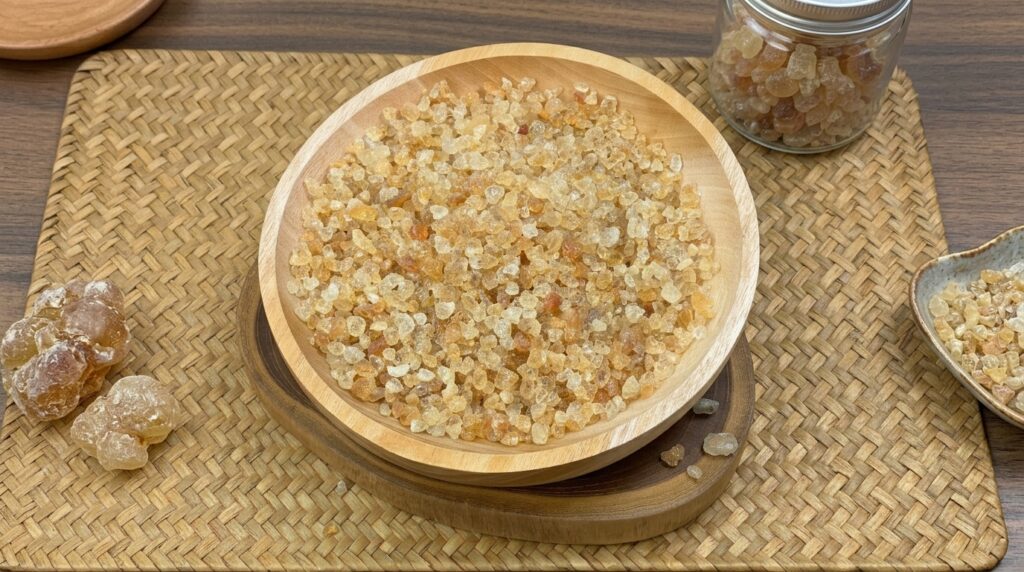
For generations across South Asian countries like India and Pakistan, natural plant exudates have formed the backbone of restorative culinary traditions. Among the most treasured is Acacia gum, widely known in Urdu and Hindi as Gond (or Gond Babool, Dink, or Gum Arabic). Harvested from the hardened sap of wild Acacia trees (chiefly Acacia senegal and Acacia nilotica), these golden, glass-like crystals are deeply valued in Ayurvedic, Unani, and traditional regional folk medicine as a rejuvenating powerhouse.
What is Acacia Gum (Gond)?
Acacia gum is a complex, branched arabinogalactan-protein polysaccharide. When the bark of the babool or acacia tree is tapped, it secretes a sticky sap that naturally dries under the sun into hard, amber-colored tears.
Understanding the Difference: Gond Babool vs. Gond Katira
In South Asian spice markets, buyers frequently confuse two entirely different edible gums. It is essential to know the difference:
- Gond Babool (Acacia / Babool Gum):
This is the true acacia gum. In Ayurveda, it possesses Ushna (warming) potency. It cannot be eaten raw or dry-roasted, and it is not soaked or drunk in water. When fried in hot ghee, it expands and puffs up into crisp, popcorn-like spheres. It is the premier tonic for winters, postpartum care, and bone strength. - Gond Katira (Tragacanth Gum):
Derived from Astragalus shrubs, it has Sheeta (cooling) potency. When soaked in water, it swells dramatically into a translucent, gelatinous jelly and is used during scorching summer months in Faloodas and sweet iced drinks like Lassi or lemonade to beat the heat.
Nutritional Profile of Acacia Gum (Gond)
Acacia gum is one of the nature’s richest, cleanest sources of pure water-soluble dietary fiber. It is virtually fat-free and has a very low glycemic impact.
Approximate nutritional values per 100 grams:
| Nutrient | Amount per 100g | Functional Role |
| Energy | ~350–360 kcal | Fermentable caloric yield via short-chain fatty acids |
| Protein | 2.0 – 2.5 g | Natural glycoproteins intrinsic to the gum matrix |
| Total Fat | 0 g | Naturally completely fat-free |
| Carbohydrates | 80 – 85 g | Complex, non-digestible prebiotic polysaccharides |
| Dietary Fiber | 75 – 85 g | Soluble, fermentable prebiotic dietary fiber |
| Calcium | High trace levels | Supports bone mineralization and skeletal strength |
| Magnesium & Potassium | Significant traces | Electrolyte balance and cellular signaling |
7 Science-Backed Health Benefits of Acacia Gum
While modern wellness trends have recently embraced “prebiotic acacia fiber,” traditional practitioners in Ayurveda and Unani medicine have relied on its physiological benefits for centuries.
1. Superior Prebiotic for Gut Microbiome Support
Unlike many fibers that ferment aggressively and cause gas or bloating, acacia gum undergoes slow, uniform bacterial fermentation in the colon. It selectively feeds beneficial probiotic strains, especially Bifidobacterium and Lactobacillus. This fermentation generates short-chain fatty acids (SCFAs), notably butyrate, which nourishes the mucosal intestinal barrier, reduces systemic gut inflammation, and supports regularity.
2. Strengthens Bones, Joints, and Connective Tissues
Traditionally celebrated in Ayurveda for treating joint weakness (jodon ka dard), acacia gum provides natural structural bio-compounds and bioavailable minerals like calcium and magnesium. Research confirms that acacia exudates possess potent antioxidant and anti-inflammatory properties that help protect synovial fluid in joints, soothe lower-back fatigue, and support bone density.
3. Helps Regulate Blood Sugar and Blunts Glucose Spikes
As a viscous soluble fiber, acacia gum slows down the transit time of food from the stomach to the small intestine. This delayed gastric emptying significantly moderates carbohydrate digestion and slows the absorption of glucose into the bloodstream, helping blunt post-meal blood sugar spikes and supporting long-term insulin sensitivity.
4. Promotes Cardiovascular Health and Lipid Balance
Acacia fiber binds bile acids in the digestive tract, facilitating their excretion. To replenish bile, the liver pulls circulating low-density lipoprotein (LDL, or “bad”) cholesterol directly from the bloodstream. Clinical studies have shown that consistent dietary acacia fiber intake helps lower total cholesterol and LDL levels without compromising protective HDL cholesterol.
5. Prolongs Satiety and Supports Weight Management
Because acacia fiber expands in the stomach, it promotes gastric fullness and triggers the release of satiety hormones like peptide YY (PYY) and GLP-1. Adding natural acacia gum to traditional preparations helps keep you full for hours, curbing impulsive snacking and helping maintain a healthy weight.
6. Natural Kidney and Metabolic Support
Emerging pharmacological studies show that dietary acacia gum binds nitrogenous waste products in the colon, encouraging their elimination through the digestive tract rather than overloading the renal filtration system. In traditional Unani medicine, it has long been recommended to help ease metabolic and renal strain.
7. Gentle on the Digestive Lining (Soothes Acidity and Ulcers)
The soothing, demulcent properties of acacia gum coat the delicate mucosal lining of the esophagus and stomach. This protective barrier shields the gastrointestinal lining from harsh stomach acids, providing gentle relief from acid reflux, hyperacidity, and mucosal irritation.
Traditional Uses in South Asian countries like India and Pakistan:
When and Why Is It Recommended?
In Pakistani and Indian homes, Gond is not just an occasional ingredient; it is a seasonal and restorative dietary therapy tailored to specific health needs:
- Postpartum Recovery (Jaapa / Post-Delivery Care):
Gond is deeply revered for new mothers. Following childbirth, women are traditionally given restorative confections such as Panjiri or Gond ke Laddu—made with whole-wheat flour, desi ghee, crushed nuts, makhana, seeds, dried fruits, and puffed gond. It is believed to restore maternal vitality, strengthen the pelvic girdle and lower back (kamardard), and support healthy lactation. - Winter Tonic for Warmth and Resistance:
Because of its warming (Ushna) Ayurvedic nature, families prepare gond-based sweets during the bitter winter months. It acts as an internal insulator, shielding the body from cold drafts and providing sustained energy. - Age-Related Frailty and Back Pain:
Elderly individuals and manual laborers experiencing chronic spinal aches, degenerative joint pain, or muscular exhaustion are routinely advised to consume gond preparations with warm milk to rebuild core stamina.
How to Properly Prepare and Consume Gond Babool in Daily Life
Acacia gum cannot simply be chewed whole or dry-roasted in a pan; its physical structure requires specific fat-based techniques to unlock its benefits.
- The Ghee-Puffing Method (Traditional & Delicious):
Never dry-roast gond crystals in a dry pan—they will burn and remain rock-hard. Instead, heat a generous tablespoon of pure desi ghee over medium-low heat. Add a spoonful of clean gond crystals. Within seconds, the crystals expand and puff up into crisp, light, airy bubbles (much like tiny popcorn). Drain them on a plate. You can crush these crunchy puffed gems between your fingers or with a rolling pin and mix them into warm milk, laddus, or your morning breakfast bowls. - Warm Milk Tonic (Gond Ka Doodh):
Crush freshly ghee-puffed gond into a powder. Stir it into a hot cup of milk simmered with a pinch of turmeric, cardamom, and sliced almonds for a restorative bedtime drink to soothe joints.
Wholesome Ways to Enjoy Gond: Meaningful Masala Recipes
Looking for modern, nutritious ways to enjoy this ancient superfood outside of heavy, sugar-rich winter laddus? You can easily introduce gond into your clean-eating morning routine.
Try our signature Instant Pot Date and Nut Oatmeal recipe! This nutrient-dense breakfast bowl elevates your morning routine with a burst of prebiotic fiber and delightful crunch. We combine ghee-puffed gond with toasted oats, roasted nuts, seeds, dried fruits, and crispy makhana (fox nuts). Simply pour warm milk or plant-based milk over a bowl of this comforting oatmeal. The gond adds a light, crispy, and crunchy texture like caramel crunch while infusing your breakfast with joint-nourishing minerals and long-lasting energy to start your day right.
Conclusion
Acacia gum (Gond) is a timeless example of traditional Ayurvedic and Unani culinary wisdom aligning with contemporary nutritional science. From its remarkable prebiotic fiber content and joint-soothing properties to its time-tested role in postpartum healing (jaapa) and winter vitality, this golden crystal is an invaluable functional food. By understanding how to properly prepare it—specifically slow-blooming it in desi ghee—you can effortlessly harness the restorative power of Gond in your daily life.
Trusted Sources & References
- Indian Council of Medical Research (ICMR) – National Institute of Nutrition (NIN): Nutritive Value of Indian Foods and Dietary Fibres in Health and Disease.
- Ayurvedic Pharmacopoeia of India (API): Monograph on Babbula (Acacia arabica / Acacia nilotica) Gum and Exudates (Niryasa).
- PubMed / National Library of Medicine (NCBI): Comparative Prebiotic Effects of Gum Arabic (Acacia senegal) and Its Fermentation Profile in the Human Intestine.
- Food and Agriculture Organization (FAO) / WHO Joint Expert Committee on Food Additives (JECFA): Safety and Dietary Specifications for Acacia Gum.
- Journal of Clinical Biochemistry and Nutrition: Evaluation of Acacia Gum Supplementation on Metabolic Parameters and Satiety.