
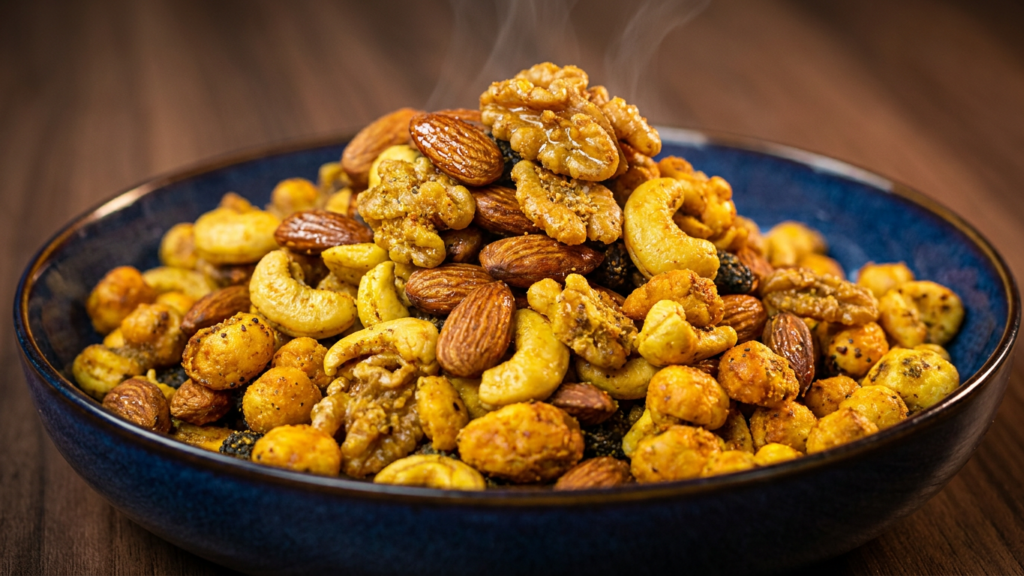
Nuts have been valued in traditional diets for centuries because they combine healthy fats, protein, minerals, fiber, and rich flavor in one naturally dense food. Almonds, walnuts, pistachios, cashews, pecans, hazelnuts, and other nuts continue to remain widely appreciated not only as snacks, but also as ingredients used in desserts, sauces, savory dishes, breakfasts, and energy-rich homemade foods.
One of the main reasons nuts are so highly regarded is their nutrient density. Even small portions provide important nutrients including magnesium, vitamin E, zinc, selenium, potassium, healthy fats, and plant-based protein. Because of this combination, nuts are often included in balanced diets focused on nourishment, satiety, and long-lasting energy.
Healthy fats found in nuts are another major reason they continue to receive attention in nutrition-focused discussions. Many nuts naturally contain unsaturated fats, including omega-3 fatty acids in walnuts, which are commonly associated with heart-conscious eating patterns and balanced long-term dietary habits.
Nuts are also widely discussed because of their protein and fiber content. This combination helps snacks and meals feel more satisfying and filling compared to foods built mainly around refined sugars or processed carbohydrates. Homemade snacks such as spicy roasted nuts or date and nut crunch bars often feel more sustaining because they combine texture, healthy fats, natural sweetness, and protein together.
Vitamin E is another important nutrient commonly found in almonds and several other nuts. It is frequently discussed in relation to skin health and antioxidant support. Minerals such as magnesium and zinc also play important roles in normal body function, muscle activity, and energy production.
Another reason nuts remain highly versatile is the variety of ways they can be used in cooking. Ground nuts can add richness to sauces and curries, crushed nuts create texture in desserts, and roasted nuts deepen flavor in snacks and savory dishes. Nuts are also commonly paired with honey, dates, dark chocolate, oats, yogurt, and dried fruits because their richness balances sweetness beautifully.
In many traditional kitchens, nuts are closely associated with festive foods, nourishing desserts, winter recipes, and energy-rich homemade snacks. Recipes such as date and nut crunch bars, saffron desserts, spiced nuts, and traditional sweets often rely on nuts not only for flavor but also for texture and richness.
Today, nuts continue to remain one of the most respected whole foods because they combine nutrition, versatility, convenience, and satisfying texture in a natural form. Whether blended into sauces, added to desserts, roasted for snacks, or paired with dates and honey, nuts continue to hold an important place in both traditional recipes and modern balanced eating habits.