
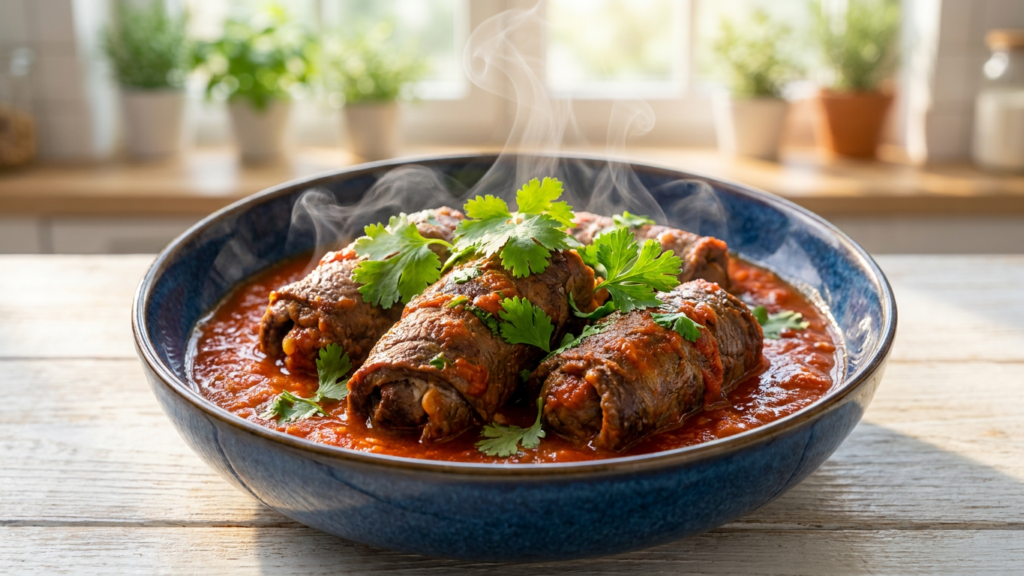
Stuffed and rolled meat dishes have appeared in many culinary traditions for generations. Each region developed its own version using local ingredients, spices, and cooking styles. Eastern Europe has its roulades, while Mediterranean and Middle Eastern cuisines offer their own stuffed meat dishes. The idea of wrapping flavorful fillings inside thin cuts of meat remains popular because it is practical and comforting.
In many traditional kitchens, people prepared these dishes for gatherings and family dinners. They also served them on occasions when meals needed to feel more special. Cooks used simple and accessible ingredients to create a satisfying meal. Slow cooking the rolls in sauce helped tougher cuts of meat become tender. It also allowed the sauce to develop rich layers of flavor.
Over time, different cultures adapted stuffed meat rolls to reflect their own culinary identities. Some versions focused on herbs and vegetables, while others incorporated cheese, nuts, dried fruits, or warming spices. The balance between savory richness and gentle sweetness found in many rolled meat dishes continues to make them especially comforting and satisfying.
This version draws inspiration from that broader tradition. It combines creamy cheese, herbs, nuts, cranberries, and rich tomato sauce. The result is a modern fusion-style dish with plenty of flavor. The mix of textures makes it elegant enough for gatherings. At the same time, it keeps the warmth and comfort of slow-cooked home-style meals. Traditional foods often carry cultural stories and connect generations. Shared recipes and familiar ingredients help keep these traditions alive.. You can explore this connection further in our guide to the history, tradition, and cultural significance of Talbina.
Today, Stuffed Beef Rolls continue to remain popular because they combine presentation, flavor, and comfort in a way that feels timeless across many cuisines. Whether served for a family dinner or a special meal, they represent the kind of cooking that values patience, richness, and shared dining experiences.